

How To Know If Sod Is Dead
This post may incorporate affiliate sales links. Please come across my full disclosure policy for details
As the warm atmospheric condition comes to an end, you decide to take a well-deserved break from all the hard yard work you lot have been doing all season. Before you prepare your plants for the colder months, you make up one's mind to sit back and enjoy the view of your property.
But just every bit you have settled into a comfortable chair, something suddenly catches your eye. Yous sit up at attention.
There it is: A dreaded patch of brownish mars your view. You wonder, is information technology dormant grass or dead grass? Information technology is fourth dimension to castor off your detective skills.
2 very dissimilar things that can exist about indistinguishable from 1 some other. This fact has caused many homeowners to make assumptions. And those assumptions led many of them to have action that wound up individual plants and, potentially, their lawns equally a whole.
Knowing whether your grass is dead or dormant will salve you many heartaches, headaches, and backaches.
Make sure to also check out our pampas grass growing guide for more information almost how to grow this cute ornamental grass.
Today, you will learn how to save yourself a lot of time and pain.
The information you'll find here includes:
- How to tell if plants are dead or dormant
- Causes of dead grass
- Reasons your lawn to goes fallow
- How to remove dead patches
- How to deal with dead spots or patches in an otherwise good for you chiliad
Read this article and y'all'll know how to tell if your healthy lawn is playing possum.
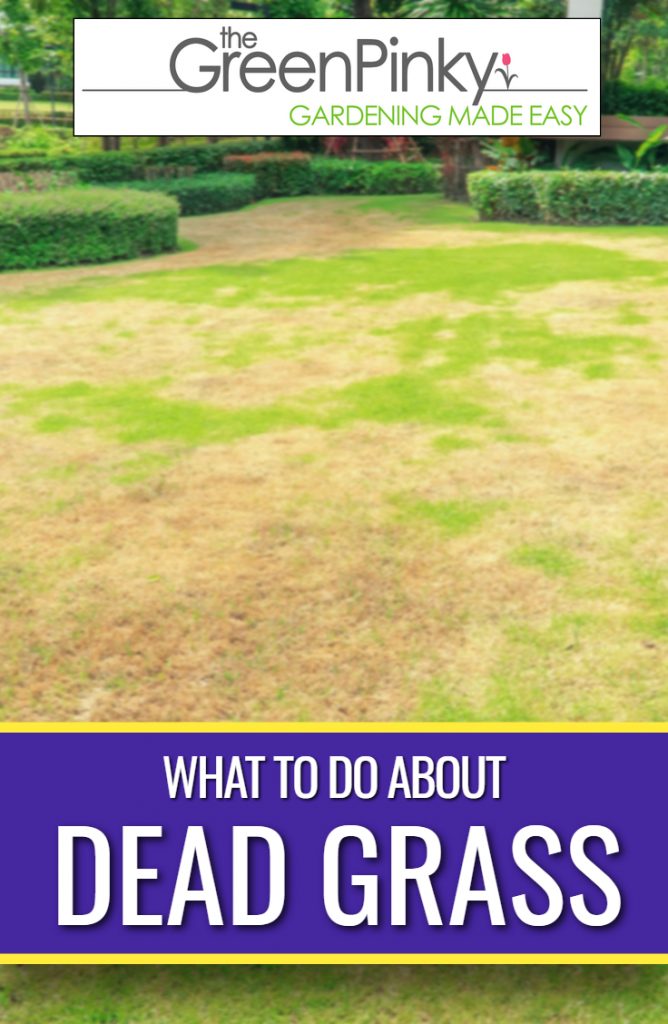
The Difference Betwixt Dead and Dormant Grass
Information technology's a mutual misconception that a brown lawn is dead. This could not be further from the truth. Let's look at the reasons for dormancy, causes of expressionless grass, and how to tell the difference between them.
What Happens When Your Backyard Goes Dormant?
Dormancy is a natural, salubrious defence force mechanism. A dormant lawn is merely protecting itself from conditions that could compromise its survival.
When plants dormant, the blades will turn brownish and dice.
But how is dying a defence force mechanism?
Well, although the fallow grass turns brown and dies, the crown and the plant's root system remain alive in the soil.
The crown is the most essential function of your grass. It is the thick, whitish part that grows at the soil level. The crown is where the blades and root arrangement meet. It is the foundation of a good for you backyard, as all growth originates in the crown. If the crown dies, then the plant is dead.
A dormant lawn turns brownish because the blades are non essential to survival. The crown and the root system, yet, are indispensable to the plant'southward continued life. In one case the blades have died, the crown and the root arrangement are able to conserve h2o and nutrients for themselves. This helps both to survive.
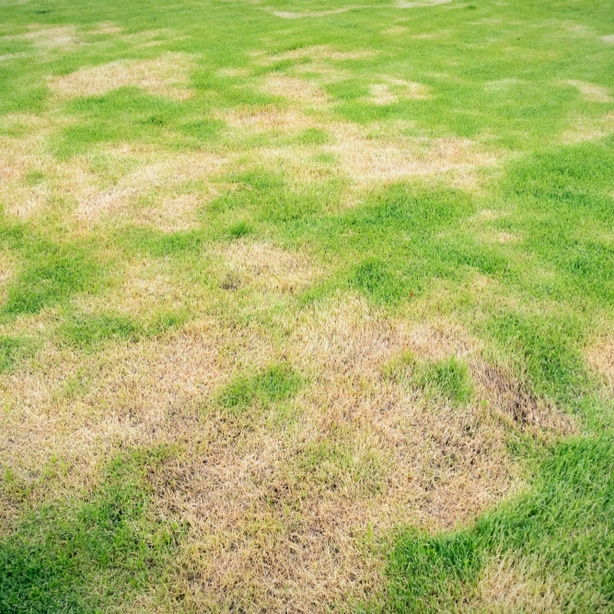
Reasons Your Lawn Will Get Dormant
Dormancy differs for warm-season and cool-flavor grasses.
Cool-Flavor Grass
Cool-season vegetation goes dormant during extended periods of drought and extreme summer heat. It does not use h2o or nutrients as efficiently as its warm-season analogue. As such, it requires more water to survive.
There is non plenty water for active growth during periods of drought and heat. Dormancy protects plants from a lack of water by reducing the amount needed to stay live.
Cool-flavor plants do not go fallow during winter, although information technology may appear that way. Instead, they enter a suspended state of growth and form complex sugars that act as a natural antifreeze. Although it sounds like dormancy, this is unlike.
Warm-Season Grass
Warm-season vegetation lives upwards to its proper noun. Considering it uses water and nutrients efficiently, it can grow during extended periods of rut and drought. Information technology will go along growing with very fiddling water, every bit long every bit the temperature is suitable.
Warm-season turf is balky to colder conditions conditions and climates. Information technology will enter dormancy when the temperature of the soil drops beneath 65℉. For moderate climates, this usually occurs sometime in November.
Dormancy is proof of the efficient use of water and nutrients. Warm-season grass roots conserve h2o and nutrients through the winter months considering they are not readily available during that time. This ensures survival through the cold season.
The Effect of Thatch on Your Backyard
While having some thatch on your property is keen, having too much of it can crusade existent problems. In some cases, information technology can cause your grass to get dormant.
Thatch is a layer of dead and living textile that builds up between the soil and the blades. Opposite to popular conventionalities, grass clippings on your lawn practice not cause thatch buildup.
A thin layer of thatch tin help plants retain water and protect the soil from astringent temperature fluctuations. Both of these will assist go along the turf healthy.
All the same, if the thatch grows too thick, it can smother plants. Information technology volition forbid the free flow of h2o, air, and nutrients. Thick layers of thatch can crusade water to puddle on your lawn and drown all living things.

At its worst, a thick layer of thatch volition not allow grass roots to reach the soil. This, in plough, causes the roots to abound entirely in the thatch, which volition leave your grass vulnerable to drought, overwatering, and other forms of stress.
These stressors can crusade plants to go dormant at commencement. Withal, they will eventually die if the thatch problem is not taken care of.
Causes of Dead Grass in Your Lawn
Let'due south take a look at some of the conditions that tin cause your lawn to die.
Thatch
Nosotros already talked about what this culprit is capable of doing, so I will non repeat the data here.
Drought
Drought will force plants to go dormant. However, all living things need water to survive. And so if the drought lasts besides long, the plants will perish.
During drought conditions, lawns will become dormant afterward two to 3 weeks. However, nigh will only survive for four to 6 weeks without water. Later that, water reserves are depleted, and plants volition die.
Poor Mowing Practices
Mowing your backyard too often or cutting it likewise short tin can cause undue stress for your turf. It volition likely dry out out, plough brown, and eventually die.
Call up that, ideally, y'all're only cutting off the top ⅓ of the blade whenever y'all mow. For salubrious plants, you'll want to look at the specific heights to mow to. Generally speaking, you'll want to keep your grass between two ½ and 3 inches alpine.
Watering Too Much or Not Enough
A salubrious lawn requires an inch of water per calendar week for maximal growth and healthy root systems, even in the wintertime.
If your plants practise not receive enough water from rainfall, y'all demand to get the hose out or turn on your sprinklers.
Insects
Several improper maintenance practices can cause the presence of pests in your lawn. Plants that are infested with pests take weakened roots and pull out of the ground hands.
Yous'll detect pests in areas that have been overwatered or over-fertilized.
Fungi
The presence of fungi tin can create patches and spots of bare soil. It can also exist an indication of illness.
Fungi will appear in environments with excessive moisture, piddling sunlight, and poor air circulation. Watering your property likewise often in shaded areas tin cause the growth of fungi.

Weeds
Weeds are opportunistic and invasive plants seeking to rob your salubrious, green turf of the air, water, and nutrients information technology needs to survive. If weeds are immune to grow unchecked, they tin can impale the plants you want to take on your property.
The decease of annual weeds like foxtail and crabgrass is a natural process that tin can cause spots and patches of expressionless grass to announced on your backyard. Yous can avoid this trouble with proper lawn-intendance practices.
Debris
Debris can be annihilation from leaves to toys left by your kids. Anything that prevents your grass from getting sunlight, water, or nutrients tin create brown spots.
The same can be said if the foot traffic from people and pets is as well much for your thou to take. The grass will wilt and eventually dice if a particular path is walked on too often.
If you take to walk out to the shed in your lawn to get to the lawnmower, don't take the same route every time.
Salt Harm
Soil contains a minor amount of salt naturally. Notwithstanding, large quantities of table salt can be a lawn'southward death penalty.
Salt strips moisture from the soil. This, in turn, prevents the grass from receiving a sufficient amount of water and oxygen to withstand the winter weather. It leaves the plants dehydrated and will eventually crusade them to dice.
If you experience extremely cold weather, in that location is a good chance that your roads are de-iced with salt. If that salt winds upwardly on your holding, it tin kill the vegetation.
Salt can too wind upwardly on your property if y'all alive on the coast. Salty ocean water tin can be spread by periods of heavy littoral rain or strong tempest surges.
Dog Urine
Dog urine is full of nitrogen, which is an essential nutrient. Withal, dogs are creatures of habit. As such, they tend to frequent the same spot whenever they take to get to the bathroom.
Repeated peeing on the aforementioned spot can kill vegetation. The nitrogen in dog urine tin can burn the lush, green grass yous like.
Too much of a proficient thing can be a bad sparseg.

How to Tell the Deviation Between Dead and Dormant Grass
When people talk about reviving grass or bringing information technology back from decease'south door, they are really referring to rejuvenating fallow vegetation. If you think about information technology, expressionless grass is… expressionless. Information technology'due south non coming back. But you can fix lifeless plants if they are non truly expressionless in the first place.
That's why determining if your backyard is dormant or beyond salvage is so of import.
At that place are many different means to detect out if you have a dying backyard or a dormant one. Generally, plants uniformly enter a state of dormancy. If you see an expanse of yellow or brown grass surrounded past lush greenish vegetation, then you likely accept a problem.
Hither are a few different ways to differentiate between a sleeping yard and a expressionless one.
The Tug Examination
This is the easiest style to determine whether your brown patch is dead or live. Just grab a minor patch of the brown function and tug at it. A dead plant will offer little resistance and pulls easily from the soil. Fallow grass volition put up a flake of a fight on its fashion out of the ground.
In one case you get the grass out of the earth, inspect the roots. If they are withered and gray, then your yard is as well far gone. If the roots appear white, the grass is only fallow.
Check Your Irrigation System
Your yard can get dormant in areas that do not receive plenty h2o. Check that your irrigation system is properly watering that section of your belongings.
If your sprinkler system is doing its task, then y'all probably have a more serious problem.
H2o Your Lawn
Not everyone has an irrigation arrangement ready. If you don't, don't worry. You tin can determine whether the turf is expressionless or dormant by watering it over the next few days. Fallow brown grass volition revive and bound back to life while dead grass stays brown.

How to Get Rid of Dead Grass
Here are the steps to follow to go rid of those undesired brown spots.
Step i: Create a Program
To get rid of dead vegetation, whether it exist a unmarried brown patch or a whole brown backyard, you'll need to know what caused information technology to die in the first identify.
Perform a soil test to make up one's mind whether the pH level is suitable for healthy growth. Get rid of whatever pests that damage the root system. Ensure that all areas are receiving enough water for optimal growth conditions. Continue people and pets off the belongings as yous make up one's mind the cause of your problem.
Stride 2: Treat the Afflicted Area
Spray a non-selective herbicide over the affected area to ensure that there are no weeds. The grass is already dead, then yous're not going to injure it.
Allow the herbicide to sit for a calendar week to ensure that any unwanted vegetation is taken care of. You want a blank slate.
Step 3: Dethatch the Lawn
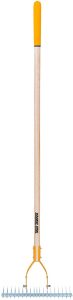
Retrieve, a picayune thatch can be a practiced thing. Just when you lot are dealing with backlog thatch, you lot'll need to apply a vertical mower or a dethatching rake to remove information technology.
If the thatch is thicker than ¾ of an inch, and then it'due south got to go. It will prevent nutrients from reaching the roots of the new grass you're trying to grow.
Step 4: Till the Soil
The soil needs to exist aerated. Tilling the soil to a depth of 4 to vi inches will incorporate any dead vegetation into the earth. This will not but attend the soil but besides go along you from having to rake the brown stuff from the surface of the lawn.
If you'd like to increment the fertility of the soil farther, you could add a layer of organic compost and till it into the basis.
Footstep 5: Constitute Seed or Lay Sod
You already checked your soil's fertility in Step 1. If your soil needed nutrients, y'all took care of that with the compost in Stride iv.
At present it's fourth dimension to bring new life to your lawn.
If using grass seed, spread it evenly over the prepared area. Check to ensure good seed to soil contact and penetration. Once yous've seeded the area, spread a thin layer of soil over the summit to help with formation.
If y'all're laying sod, make sure that each piece connects firmly with its adjacent pieces. Ensure that the root sections of each piece take solid contact with the soil.
Step six: Roll 'Em Up
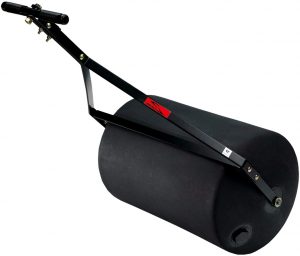
Whether you seeded or sodded the ground, yous need to break out your roller and go over information technology. This is a pace that is ofttimes overlooked, but it is essential for establishing the root system.
A roller ensures good seed-to-soil or sod-to-soil contact and helps to firm up the world.
Footstep 7: Care for the Lawn
You'll want to go along the newly seeded or sodded ground damp only non saturated. Soggy weather are not good for new growth that is beginning to constitute roots.
You'll need to water your thousand daily for a week or two and gradually scale back on the irrigation.
A few things to keep in mind in the beginning:
- Don't use your lawnmower or other equipment as it can cause ruts and damage the new root systems.
- Don't mow the new growth until it has become well above 3 inches tall. This will ensure the roots are good for you and established.
- Until the roots have taken hold and the grass begins to abound, keep foot traffic to a minimum.
Dealing With Dead Spots
What if you only have a few brown spots on your property?
If that'south the case, and so post-obit the preceding instructions would be a flake of overkill. Instead, follow these simpler steps to revive your yard.
Step 1: Rake the Spot
Raking the area volition remove excess thatch, debris, and rocks.
Step two: Moisten the Soil
H2o the soil until information technology becomes damp. Just don't overwater the area.
Footstep 3: Cutting a Border Effectually the Spot
Using a garden trowel, cutting a border around the spot. Yous'll need to penetrate the globe between 3 and four inches deep around the dead grass.
To ensure you're reaching a proper depth, dig the trowel into the ground to the hilt.
Step four: Pry Upwards the Surface area
You'll need a square shovel for this step.
Insert the edge of the blade into the border you cut out and pull the shovel back. This will begin lifting the spot out of the ground.
Every bit the spot lifts, inch the bract forward across it and pull upward the root system. Pull back on the handle until the bract is lying parallel to the world.
This is necessary to sever all roots so that they may be removed from the basis.
Repeat this process until you accept detached the dead spot's entire root system.
Push, elevator, echo…Push, lift, repeat…

Step five: Remove the Spot
Once the roots are severed, you lot should exist able to lift the spot out with your hands or a shovel. Rake off the excess soil that is still attached to the root organisation. Identify the clay back into the excavated area.
Stride 6: Fill in the Hole
Spread topsoil into the hole until information technology becomes flush with the basis that surrounds it.
At this signal, you can plant new seed or resod the spot. Use proper lawn care practices to ensure the establishment of healthy roots.
Mark the piece of work site then that you don't accidentally go over it when you mow the healthy growth around information technology.
Now y'all know how to determine if your 1000 is just taking a break or is gone for adept. Remember that preventative maintenance is the best way to keep your property green and healthy.
Source: https://www.thegreenpinky.com/fix-dead-grass-vs-dormant/
0 Response to "How To Know If Sod Is Dead"
Post a Comment